$$PLAIN_TEXT_PREVIEW$$

WEGWEISER CLASSIC BMW SERVICES

 zenwrench.com 

preservation devotion integrity


Another quick update about “happenings and goings on” at my little BMW shop in Western Pennsylvania. I’ll be sharing snapshots into what I do here as well as the occasional tech tip and hopefully some entertaining tidbits. I am immensely fortunate to do what I love every day.

Thanks for coming along for the ride!


“But that’s not a BMW!”

It began innocently enough. (Hint: THAT is almost always a bold-faced lie.)

I was working on a client’s 1972 2002tii just finishing up a couple small things when he asked me in a text message; “How good are you with Webers? Want to set up the carbs on my 1966 275GTS?”

”Oh Lord” I thought.

Also “HELL YES!.. but…”

Also: “what if…?”

And then there was the “I ONLY WORK ON ONE KIND OF CAR and THIS ISN’T ONE OF THEM!” fear of flamboyant failure. I am nothing if not riddled with crippling self doubt. If that feeling ever disappears, it’s time to sell my tools.

I always tell folks the same thing: NEVER adjust a carburetor until EVERYTHING ELSE is properly set up and adjusted. That means basic simple stuff like valve adjustment and ignition timing must be done before reaching for the all-powerful and often dangerous carb tuning tool known as the common screwdriver. 

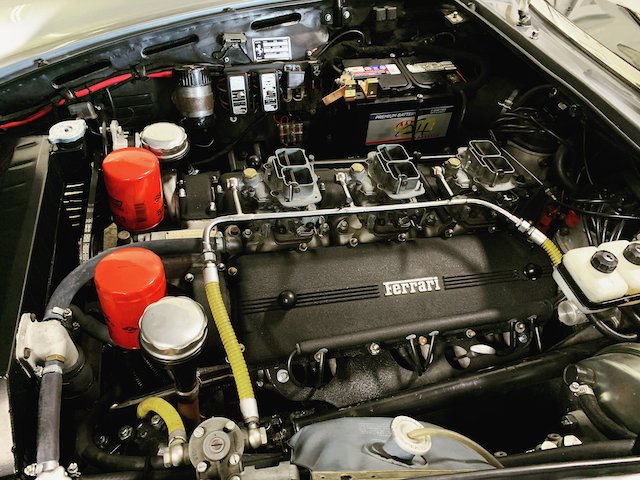
The problem is… those two things (valve adjustment and ignition timing) are absolutely NOT “the simple stuff” on a vintage V12 Ferrari with a street value north of $1.5M. The ignition system has two coils, two distributors, four sets of ignition points, condensers, etc etc… and ALL of it is jammed tight against the firewall, where access is limited unless you’re willing to risk laying 2/3rds of your body over the front, hand formed delicate fenders. Each bank of cylinders must be timed individually - and the two banks must match perfectly. I’ve had to do this on only one other V12 Ferrari several years ago and it was…to put it mildly…stressful. 
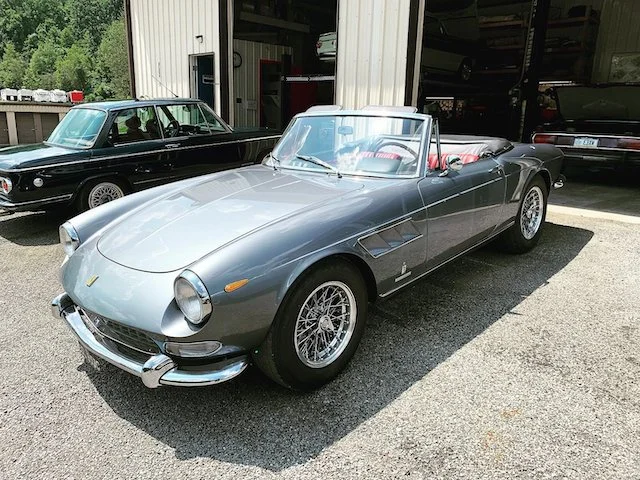
The carburetors fitted to a vintage Ferrari are functionally very similar to those fitted to many older BMWs. Of course these particular specimens (unique to these models) would cost about $15,000+ to replace. So they’re “special” see? And delicate. And old. And expensive. 

And terrifying

Synchronizing them and setting idle mixture proved to be straightforward, but there was a hesitation during acceleration that was the primary complaint of the owner. It was relatively subtle, so I was leaning toward opening up the Pandora’s box of “let’s adjust ignition timing:…and I’m sure glad I didn’t. 

On 4 and 6 cylinder BMWs a failing accelerator pump or blocked fuel passage inside the carburetor can cause a dramatic stumble when the gas pedal is pushed. The purpose of this pump (I was going to write that it’s about the size of a small toad, but that probably wouldn’t make sense, so let’s just say it’s about a 20mm square flexible piece of whatsit material with a metal center that pushes against a spring the size and shape of a chopped green bean, ok?) is to give the engine a little extra squirt of gasoline when the throttle plates open. Fuel is normally drawn into the engine from vacuum as the piston goes down and the intake valve opens…but with the plates open, vacuum is limited and the smelly stuff needs a little kick in the pants to make its way into the combustion chamber. Hence the pump diaphragms.

This problem however, seemed FAR less dramatic. (In hindsight, when the problem was spread among 12 cylinders instead of four or six, naturally it would seem less dramatic, I suppose.) I was on the verge of throwing in the towel, fearing that I would end up tallying up hour after hour of diagnostic time. I simply have too many cars to work on that I’m actually FAMILIAR with. “This one could be trouble” I thought. I figured however, that like any other car with a carburetor there are basic things I can at least check with my eyeballs. So I actuated the throttle by hand while watching the nozzles inside the carb. Fuel only dribbled out. Feebly. I’ve been into the innards of enough carbs to realize something was off. The nozzles are supposed to shoot a fairly robust stream of fuel when the throttle is opened up and these did not do that. So off came the lids of the carbs for further inspection.

Deposits from old fuel greeted me. I partially disassembled what I could, knowing that Ferrari carb parts aren’t littering the shelves at Wegweiser’s Home for Wayward Old Nerd Cars, and blew gentle amounts of compressed air through every passage related to the diaphragm and nozzles. I removed each component, replaced the diaphragms (luckily they appear to be the same ones used on common “pedestrian” Weber carbs) and like an absolute miracle from heaven - the stumble was now gone. The throttle pedal and carburetors now properly do that thing that makes a Colombo V12 sound like nothing else on this planet. The car is now a glee inducing, terrorizing, unholy giggle factory of intoxication to pilot.

But here’s the most rewarding part:

When I get that tingly feeling of accomplishment doing something like this (and YOU all need to hear about it) it’s almost always absolute ASTONISHMENT that I somehow managed to figure it out. I have a 3rd grade math level…and I don’t have enough fingers to count to twelve. So I got lucky and stacked a little NEW knowledge onto some OLD knowledge. That’s all there is to it. I may not be so lucky next time. 

Photography courtesy of Mr Gary Streiner

 
WEGWEISER CLASSIC BMW SERVICES

Copyright Zenwrench Ltd Wegweiser Classic BMW Services, Portersville, Pennsylvania 16051, USA

Unsubscribe